

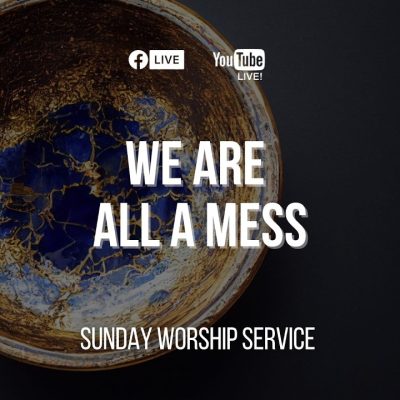
Introduction: We Are All a Mess
We have a tendency to compare our mess to others’ — either feeling worse, or quietly proud that we’re “less of a mess than someone else.” We are God’s workmanship, special and purposeful, but also broken vessels — cracked and shattered at times. The mess comes from what happens to us, and from our own sinful nature. So now what?
The Danger of Clean Religion
Once we’ve received grace, we naturally reach for structure — rules, checklists, disciplines. And those aren’t wrong. But when the rules become more important than the heart behind them, we end up performing our faith. The Pharisees are the example: they started with a genuine desire to honor God, but their traditions eventually replaced the heart of the law. The same drift can happen in any community — including ours.
The Text: Luke 7 — Dinner at Simon’s House
Jesus gets invited to dinner by Simon the Pharisee — the “who’s who” move of the day. But Simon gives Jesus no hospitality: no water for his feet, no kiss of greeting, no oil. Jesus arrives already judged as a friend of sinners, too dirty to even say the blessing. Meanwhile, a woman known in the town for her sinful life comes in with an alabaster jar of perfume. She weeps at Jesus’ feet, wipes them with her hair, and pours perfume on them. Simon is disgusted — both at her, and at Jesus for allowing it.
Two Kinds of Mess in the Room
Simon sees two categories: lawkeepers and lawbreakers. He sees the woman as a sinner — a category, not a person. Jesus asks him: “Do you see this woman?” Simon didn’t. He saw her sin. When we’re performing our clean mess, we stop seeing people and start seeing their sin — and that blindness protects our own pride while keeping others at arm’s length.
The Parable of the Two Debtors
Jesus tells Simon: two people had debts — one owed 500, one owed 50. Both were forgiven. Who loves more? The one forgiven more. Simon answers correctly, then Jesus turns it back on him: the woman’s extravagant love is the overflow of extravagant forgiveness. Simon’s indifference reveals how little he understands his own debt.
Clean Mess — The Performance Trap
We keep a clean public room and stuff everything into the closet. It looks good from the outside, but it’s exhausting. It leads to judgment of others because we’re focused on maintaining our appearance. Real freedom comes not from checking all the discipleship boxes, but from honestly acknowledging our need. Brokenness isn’t what disqualifies us from grace — it’s the exact qualification for it.
Kintsugi: Broken and Beautiful
The Japanese art of kintsugi repairs broken pottery with gold — making the cracks visible and beautiful rather than hiding them. That’s what God does with us. He doesn’t polish over our failures; he fills them with grace. And a community that displays its brokenness honestly — real, unpolished, put back together by God — is far more compelling to the world than a community of perfect-looking pottery.
Closing: Stop Performing, Start Living Free
“God doesn’t ask us to be perfect. He asks us to stop performing.” Drop the mask. Your worth is measured not by what you do, but by how deeply you are loved. “Anyone who has been forgiven much loves much.” We are all a mess — and that is exactly where grace begins.